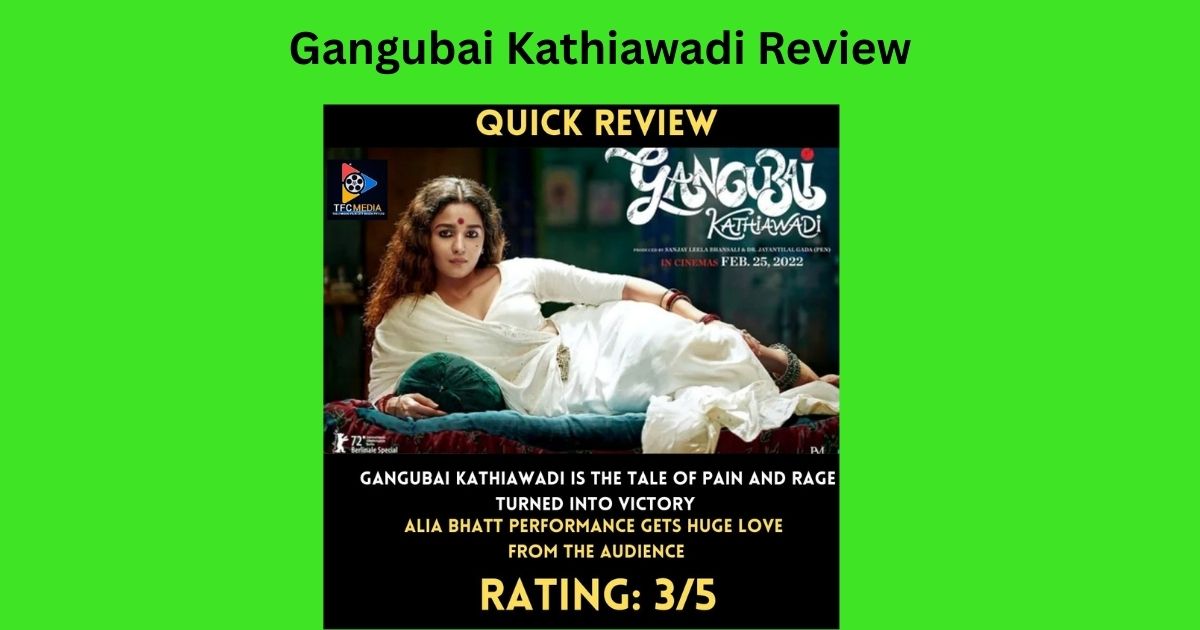
Gangubai Kathiawadi Review – A Story That Stays With You Long After the Lights Come On
There are some films you watch.
And then there are films you feel.
Gangubai Kathiawadi Review is definitely the second kind.
I remember sitting in the theater, not fully sure what to expect. A biopic? A crime drama? A social message film? What I didn’t expect was to walk out with heavy eyes, a lump in my throat, and this strange sense of admiration for a woman history once judged too quickly.
Directed by Sanjay Leela Bhansali, the film doesn’t whisper. It sings. It cries. It demands your attention. And at the center of it all is Alia Bhatt, delivering a performance that honestly surprised even her critics.
Let’s talk about it.
Story Summary Gangubai Kathiawadi Review
The story follows Ganga, a young girl from a simple family who dreams of becoming a Bollywood heroine. Like many naive dreamers, she runs away for love. But instead of film sets and cameras, she ends up in Kamathipura Mumbai’s infamous red-light district.
She is sold into a brothel. Betrayed. Trapped.
That moment changes everything.
What begins as a heartbreaking survival story slowly transforms into something else. Ganga becomes . And Gangubai becomes a force.
She refuses to remain a victim. She earns respect within the brothel, builds alliances, and eventually Gangubai Kathiawadi Review becomes a leader for the women of Kamathipura. She doesn’t deny her reality — she reshapes it.
And that’s what makes this film different from a typical tragic biopic.
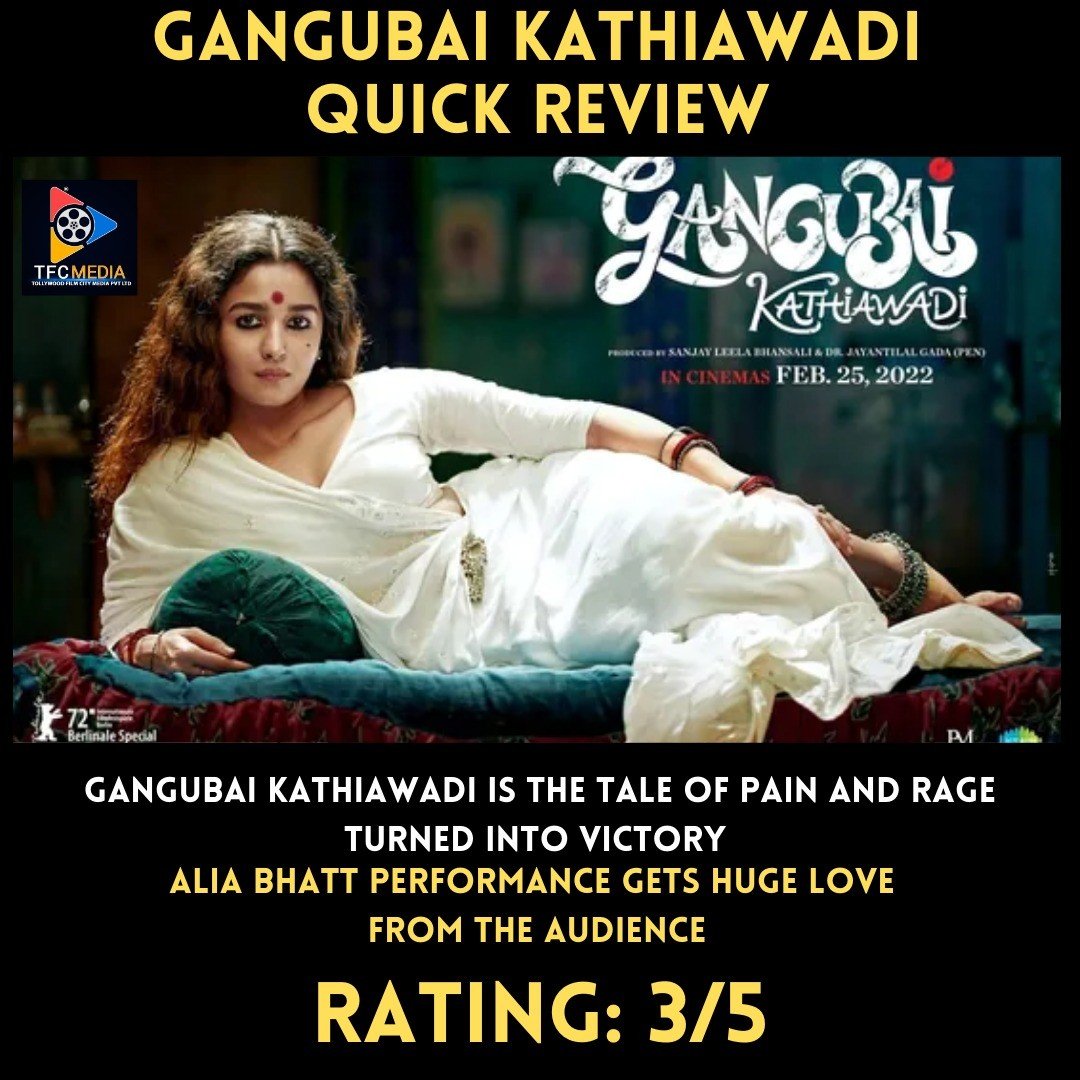

Alia Bhatt – The Unexpected Powerhouse
I’ll admit something. When the casting was first announced, I had doubts. Could Alia really carry such a heavy role?
But wow. She doesn’t just act she transforms.
Her eyes do half the storytelling. The innocence in the beginning slowly hardens into confidence. Then comes authority. And beneath it all, there’s always pain.
There’s a scene where she delivers a public speech demanding dignity for sex workers. No background score, no dramatic lighting tricks. Just her voice. That moment gave me chills.
She doesn’t overdo it. She doesn’t beg for sympathy. She simply is Gangubai.
The Visual World – Beauty Inside Brutality
Bhansali’s signature style is everywhere. Grand sets. Rich colors. Dramatic frames.
Gangubai Kathiawadi Review which is historically associated with darkness and exploitation, is shown with color and vibrancy. Some people criticized that choice. But I think it was intentional.
The beauty in the visuals reflects Gangubai’s spirit. Even in a broken system, she refuses to let her world look broken.
The white sarees she wears later in the film? Symbolism. Power. Purity in perception. A quiet rebellion against how society labels women like her.
Deep Ending Explanation – What It Really Means
Now let’s talk about the ending. Because that’s where the emotional weight truly hits.
Gangubai Kathiawadi Review eventually becomes a recognized voice for the women of Kamathipura. She meets politicians. She speaks about rights, education for children of sex workers, and dignity.
But here’s the thing the film doesn’t give us a fairy-tale conclusion.
Yes, she gains influence. Yes, she changes policies. But she never escapes the world she was forced into.
And that’s the point.
The ending isn’t about escape. It’s about ownership.
Gangubai doesn’t ask society to rescue her. She demands society to respect her. There’s a huge difference.
In the final scenes, when she walks through Kamathipura with confidence, it feels like she has built her own kingdom. Not one of glamour. But of survival, power, and solidarity.
There’s no dramatic death scene. No exaggerated tragedy. Just a sense that her legacy will outlive her.
And somehow… that feels more powerful.
Hidden Meanings and Symbolism
1. The White Saree
As I mentioned earlier, Gangubai often wears white later in the film. Traditionally, white can symbolize purity or widowhood in Indian culture.
Here, it challenges judgment.
Society often labels sex workers as “impure.”Gangubai Kathiawadi Review wears white like a statement — redefining purity on her own terms.
2. The Balcony Scenes
Notice how often she stands on a balcony addressing people below.
It’s symbolic positioning.
From being trapped inside a room, she rises to literally stand above the crowd. It visually represents her transformation from victim to leader.
3. The Brothel as a Political Space
The brothel is not just a setting. It becomes a political ground. Deals are made. Speeches are given. Decisions are shaped.
Bhansali turns a marginalized space into a center of power. That shift is deliberate.
Personal Observations – The Parts That Stayed With Me
Some scenes hit quietly.
Like when young girls arrive at the brothel. The camera doesn’t dramatize it too much. It just lets you sit with the discomfort.
Or when Gangubai Kathiawadi Review laughs loudly in front of powerful men not nervously, but boldly. That laugh says more than a speech.
The film isn’t perfect, though. At times, the pacing slows down. A few dramatic moments feel slightly stretched. And yes, it carries Bhansali’s theatrical touch which may not work for everyone.
But emotionally? It works.
It doesn’t try to clean up Gangubai Kathiawadi Review life. It doesn’t paint her as flawless. She’s strong, yes. But also stubborn. Emotional. Sometimes reckless.
And that’s what makes her human.
Performances Beyond Alia
I should also mention Gangubai Kathiawadi Review in his brief but impactful role. His presence adds weight without overshadowing the narrative.
The supporting cast brings authenticity to the world of Kamathipura. The friendships between the women feel genuine messy, protective, complicated.
Final Thoughts – Is It Worth Watching?
Absolutely.
Gangubai Kathiawadi Review isn’t just a film about a sex worker who rose to power. It’s about dignity. It’s about rewriting narratives forced upon you.
It asks uncomfortable questions:
- Who decides morality?
- Why does society judge survival differently?
- Can someone claim respect in a system built to deny it?
And maybe that’s why it lingers.
You don’t just remember Gangubai as a character. You remember her voice.
FAQ Section
1. Is Gangubai Kathiawadi Review based on a true story?
Yes. The film is inspired by the real-life story of Gangubai Harjivandas, a powerful figure in Mumbai’s Kamathipura area.
2. What is the main message of the film?
The core message revolves around dignity and empowerment. It challenges society’s perception of sex workers and demands recognition of their rights.
3. Is the movie very emotional or disturbing?
It has emotional and intense moments, especially in the first half. But it balances tragedy with strength and empowerment rather than staying purely dark.
If you haven’t watched it yet, go in with an open mind. It’s not a light weekend entertainer. It’s layered. It’s dramatic. It’s flawed in places.
But it’s powerful.
And sometimes, that’s enough.
